

Download vs. Upload Speed
Understand download and upload speed, how each affects everyday internet use, and why both matter for work and entertainment.
Internet basics2 min read
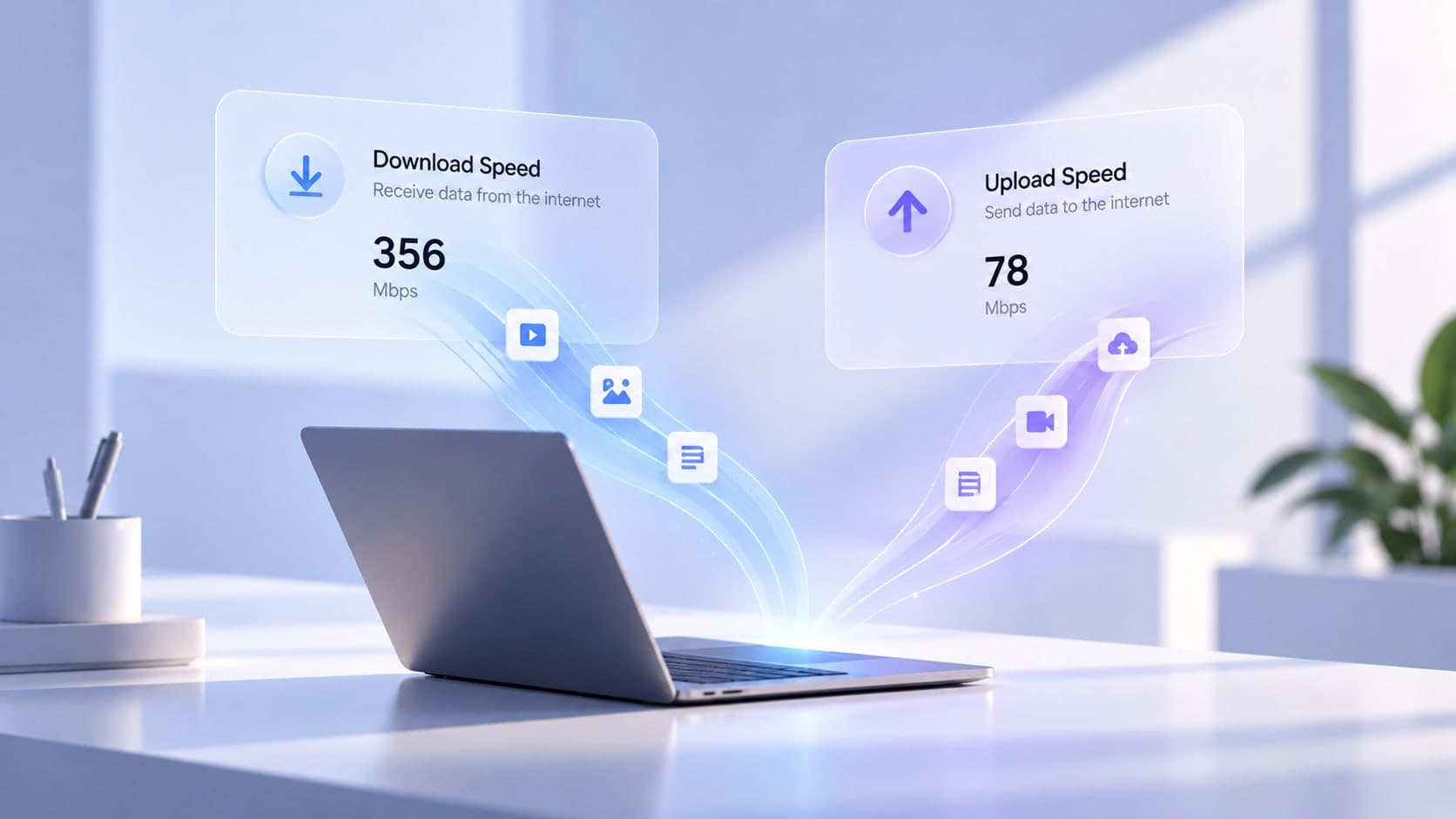
Internet speed tests usually show at least two headline measurements: download speed and upload speed. They describe data moving in opposite directions, and each matters for different activities. Knowing the difference makes it easier to interpret your results and decide whether your connection fits the way you use the internet.
What is download speed?
Download speed measures how quickly data is transferred from the internet to your device. It affects tasks such as loading web pages, streaming video, downloading apps, receiving files, and installing game updates. It is commonly measured in megabits per second (Mbps). Higher download capacity can help large transfers finish sooner, although the remote service and other conditions also matter.
What is upload speed?
Upload speed measures how quickly data moves from your device to another system over the internet. It matters when you send email attachments, upload photos, back up files, share your screen, or broadcast live video. Video meetings use both directions: you receive other participants' video and send your own audio and video.
Why are the numbers often different?
Many residential internet plans provide more download capacity than upload capacity. That arrangement suits households that consume more content than they send, but it may be less convenient for people who regularly upload large files or work with cloud services. Fiber plans may offer more balanced speeds, depending on the provider and package.
How to interpret a speed test
Compare both figures with your actual activities and plan details. If downloads are fine but sending files is slow, upload capacity or the service receiving the file may be the limiting factor. If both are low, investigate Wi-Fi, congestion, the device, or the provider. Remember that Mbps and MB/s are different units: eight bits make one byte, before accounting for protocol overhead and other real-world factors.
Key takeaway
Download speed is about receiving data; upload speed is about sending it. Both contribute to a smooth online experience, especially for remote work and content creation.